
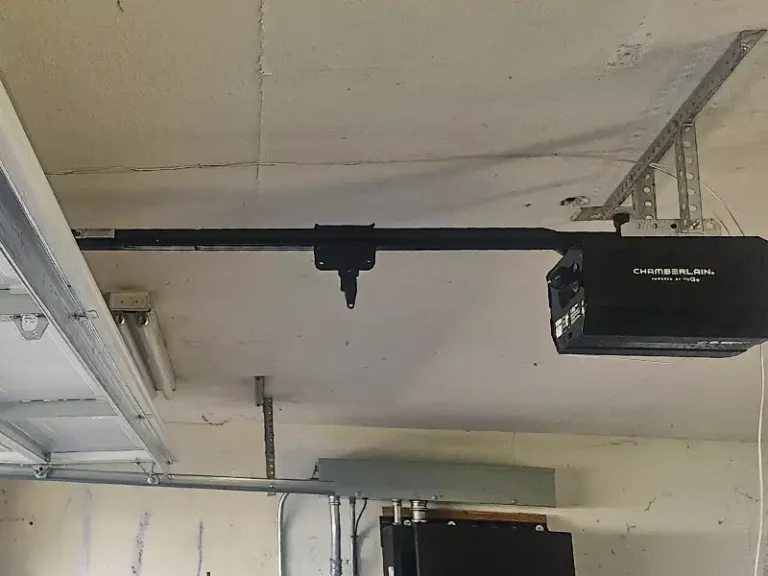
Choosing between a belt drive and a chain drive garage door opener is one of the most common questions homeowners bring up when they call a garage door company. Both designs have been refined for decades, and both are still sold today because both still make sense in different situations. The right answer depends less on which one is objectively better and more on where your garage sits, who sleeps near it, and how much you want to spend.
At Butler Garage Doors, we install and repair openers across Chula Vista and the wider San Diego County area, and we carry the major brands homeowners already recognize, including LiftMaster, Genie, Chamberlain, and Marantec. This guide walks through how belt and chain drive openers actually work, where each one shines, and how to think about the tradeoffs before you commit to a new unit. If you would rather just talk it through, our team is available at (619) 404-2213 for a straight answer and honest options.
How Belt Drive and Chain Drive Openers Actually Work
Every residential garage door opener uses the same basic idea. A motor mounted at the back of the unit drives a trolley along a rail, and that trolley pulls an arm connected to the top of the door. What changes between opener types is the mechanism that moves the trolley along the rail, and that single difference is what creates most of the noise, cost, and maintenance differences homeowners notice.
Belt Drive Openers Explained
A belt drive opener uses a reinforced rubber belt, often strengthened with steel or fiberglass cords, to move the trolley. Because rubber flexes and absorbs vibration instead of transmitting it through metal links, belt drive systems run with noticeably less mechanical clatter. LiftMaster markets several of its DC motor belt drive models specifically as quiet garage door openers, positioning them for attached garages, homes with a bedroom or living space above the garage, and townhomes that share a wall with a neighbor.
Belt drive units are frequently paired with DC motors rather than AC motors, which adds smoother starts and stops on top of the quieter belt mechanism. That combination is why belt drives have become the default recommendation whenever noise is a real concern for the household, not just a minor annoyance.
Chain Drive Openers Explained
A chain drive opener uses a metal chain, similar in concept to a bicycle chain, to pull the trolley along the rail. Metal on metal contact is inherently louder than a rubber belt, and that sound can transmit through the door and the garage structure into the house. This is the tradeoff chain drives have always carried, and it has not changed with newer models.
What has not changed either is the value chain drives offer. A chain and its drive gear are mechanically simple, have been produced at scale for decades, and tend to cost less than a comparable belt drive unit. Genie’s Chain Drive 550, for example, is sold as a straightforward, factory assembled chain drive opener built for durability and value rather than for whisper quiet operation. It is a legitimate, well supported product line, not a compromise choice.
Noise and Vibration: What Homeowners Actually Notice
Noise is usually the first thing that comes up in conversation, and it deserves an honest answer rather than a sales pitch. If your garage is attached to the house, sits under a bedroom, or backs up to a shared wall with a neighbor, the difference between a belt drive and a chain drive opener is something you will hear every single day, particularly late at night or early in the morning.
LiftMaster’s own side by side comparisons between a belt drive DC motor opener and a chain drive AC motor opener show a clear, audible gap in both sound and vibration. That is manufacturer marketing, but it reflects a mechanical reality that independent reviewers and installers observe as well. Rubber belts simply transmit less vibration into the door rail than steel chains do.
That said, noise only matters if it actually reaches living space. A detached garage sitting well away from the house, or a garage where nobody minds a bit of mechanical sound, does not need the extra spend on a belt drive to solve a problem that was never really a problem. Plenty of Chula Vista homeowners with detached garages or converted workshop spaces are perfectly happy with a chain drive, and there is nothing wrong with that choice.
Cost Differences Between Belt Drive and Chain Drive Openers
Cost is where chain drives most clearly earn their reputation as the budget friendly option. National cost data compiled by HomeGuide puts chain drive opener units at roughly $150 to $250 for the unit alone, while belt drive units typically run about $200 to $450 for the unit. Installed, a garage door opener project of any drive type generally lands in the $300 to $900 range nationally once labor is included, though the final number depends heavily on the brand, horsepower, and any accessories like battery backup or extra safety sensors.
These figures are national averages, not a quote from Butler Garage Doors, and actual pricing in San Diego County will depend on your specific opener, door weight, and whether any wiring or bracket work is needed. If you want a number that reflects your actual garage, our garage door opener installation team can walk your setup and give you a firm quote rather than a national estimate.
It is worth noting that the price gap between belt and chain drives has narrowed over the years as manufacturers have brought belt drive technology into more mid range product lines. The decision increasingly comes down to how much quiet operation is worth to your household rather than a dramatic difference in what you will spend.
Durability, Maintenance, and Lifespan
Chain drive openers have a long track record of durability precisely because the mechanism is simple. There is less to go wrong with a chain and gear than with some other systems, though chains do need occasional lubrication and periodic tension adjustment to keep them running smoothly and quietly over the years. Skipping that maintenance is one of the most common reasons a chain drive starts to sound rougher than it did when it was new.
Belt drive systems trade a bit of that mechanical simplicity for reduced maintenance in daily use. A belt does not need lubrication the way a chain does, and it will not develop the same kind of metal on metal wear pattern. Over a long enough service life, a belt can stretch or wear and eventually need replacement, but that is a predictable, infrequent event rather than an ongoing upkeep item.
Both drive types typically last well into the 10 to 15 year range that is standard for residential garage door openers, assuming reasonable use and basic upkeep. Regular garage door maintenance, including checking the opener’s force settings, hardware, and safety sensors, does more to extend an opener’s working life than the choice of belt versus chain ever will on its own.
Safety Features Common to Both Drive Types
Regardless of whether you choose a belt drive or chain drive opener, federal product safety oversight applies equally to both. The U.S. Consumer Product Safety Commission maintains a garage door operator safety standard addressing entrapment protection, the set of requirements that keep an automatic opener from closing on a person, pet, or object in its path. That oversight is mechanism agnostic. It governs how the opener senses an obstruction and reverses, not whether it moves the door with a belt or a chain.
In practice, this means the safety sensors, auto reverse function, and manual release you rely on every day work the same way whether your opener is a belt drive or a chain drive model. The drive type affects sound and feel, not the underlying safety systems built into modern residential openers from LiftMaster, Genie, Chamberlain, and Marantec.
Which Drive Type Fits Your Chula Vista Garage
If your garage sits directly under or beside living space, or if you or a family member is sensitive to noise, a belt drive opener is worth the modest premium. The quieter operation is a real, tangible benefit you will notice every time the door opens, especially for late night arrivals or early morning departures.
If your garage is detached, sits at the far end of a longer driveway, or simply is not near a space where noise matters, a chain drive remains a smart, cost conscious choice. It is not an inferior product, and choosing it does not mean settling for less reliability. It means matching the opener to how your home is actually laid out.
Some homeowners also weigh how they use the garage day to day. A household that runs the door multiple times daily, or uses the garage as a workshop with people nearby during operation, may lean toward the quieter belt drive simply for comfort. A household that treats the garage mainly as storage or parking, with the door cycling only a couple of times a day, often finds a chain drive does everything they need without any added noise concern.
Installation and Repair With Butler Garage Doors
Whichever direction you lean, the opener you choose should be sized correctly for your door’s weight and height, wired properly, and set up with working safety sensors from day one. Our team handles garage door opener installation for belt and chain drive systems from LiftMaster, Genie, Chamberlain, and Marantec across Chula Vista and San Diego County, and we will talk through the tradeoffs above based on your actual garage rather than a generic recommendation.
If your current opener has started grinding, slipping, or reversing unexpectedly, that is usually a sign it needs attention rather than a full replacement. Our garage door repair service covers both belt and chain drive units, from chain tension and lubrication to belt inspection and motor diagnostics. Catching those issues early through routine maintenance is almost always cheaper than waiting for a full breakdown.
Reach out through our contact us page or call (619) 404-2213 if you want a straight answer about which opener fits your garage, or if you already know what you want installed. We are happy to talk through the belt versus chain decision without pushing you toward the more expensive option just because it is quieter.
Frequently Asked Questions
Is a Belt Drive Garage Door Opener Really Quieter Than a Chain Drive?
Yes. Rubber belts absorb vibration in a way metal chains do not, and manufacturer testing along with independent installer experience both confirm a noticeable difference in sound and vibration between the two, particularly for garages attached to living space.
How Much More Does a Belt Drive Opener Cost Than a Chain Drive?
Nationally, chain drive opener units tend to run about $150 to $250 while belt drive units run about $200 to $450, based on cost data compiled by HomeGuide. Full installed cost for either type generally falls between $300 and $900 depending on the specific opener and any extra features.
Do Chain Drive Openers Need More Maintenance Than Belt Drives?
Chain drives need periodic lubrication and occasional tension adjustment to stay quiet and smooth, while belt drives generally need less routine upkeep since there is no chain to grease. Both benefit from regular garage door maintenance checks on sensors and hardware regardless of drive type.
Which Opener Is Better for a Detached Garage?
A chain drive is usually the more practical choice for a detached garage, since the noise that matters most for belt drives, sound reaching bedrooms or living space, is not really a factor when the garage sits away from the house.
Are Belt Drive Openers Less Durable Than Chain Drives?
Not meaningfully. Belts can eventually stretch or wear after many years of use, but they avoid the metal on metal wear that chains experience, and both drive types commonly last well into a 10 to 15 year service life with basic care.
Can I Switch From a Chain Drive to a Belt Drive Opener?
Yes, in most cases a chain drive can be replaced with a belt drive model during a standard opener installation, as long as the new unit is sized correctly for your door’s weight and height. Our team can evaluate your current setup and recommend the right fit.
Are Belt Drive and Chain Drive Openers Equally Safe?
Yes. Federal safety standards for entrapment protection, sensors, and auto reverse apply to both drive types equally. The drive mechanism affects noise and feel, not the underlying safety systems built into today’s residential openers.
Do LiftMaster, Genie, Chamberlain, and Marantec All Make Both Types?
Most major brands, including the ones we carry, offer both belt drive and chain drive models across their residential lineups, so the decision usually comes down to which specific model fits your garage and budget rather than being locked into one drive type by brand.